
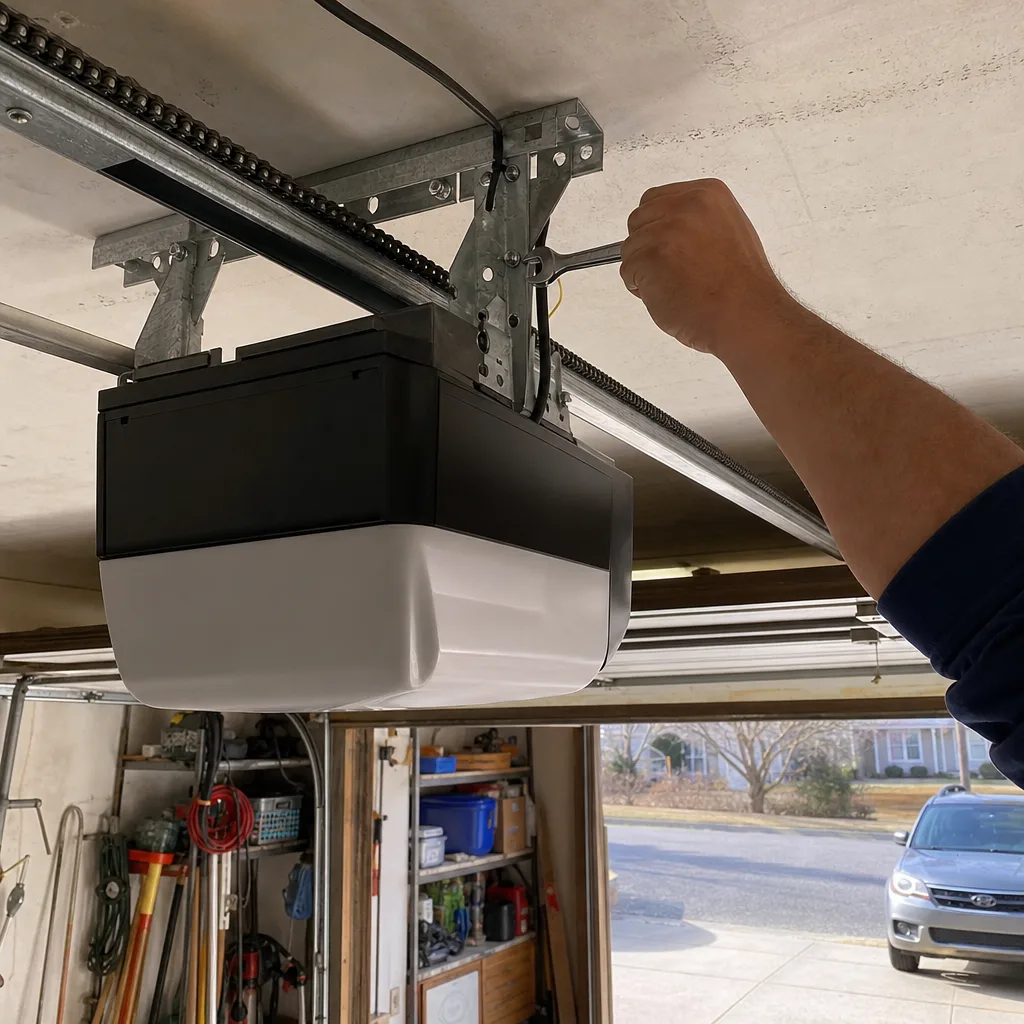
Last updated November 23, 2026
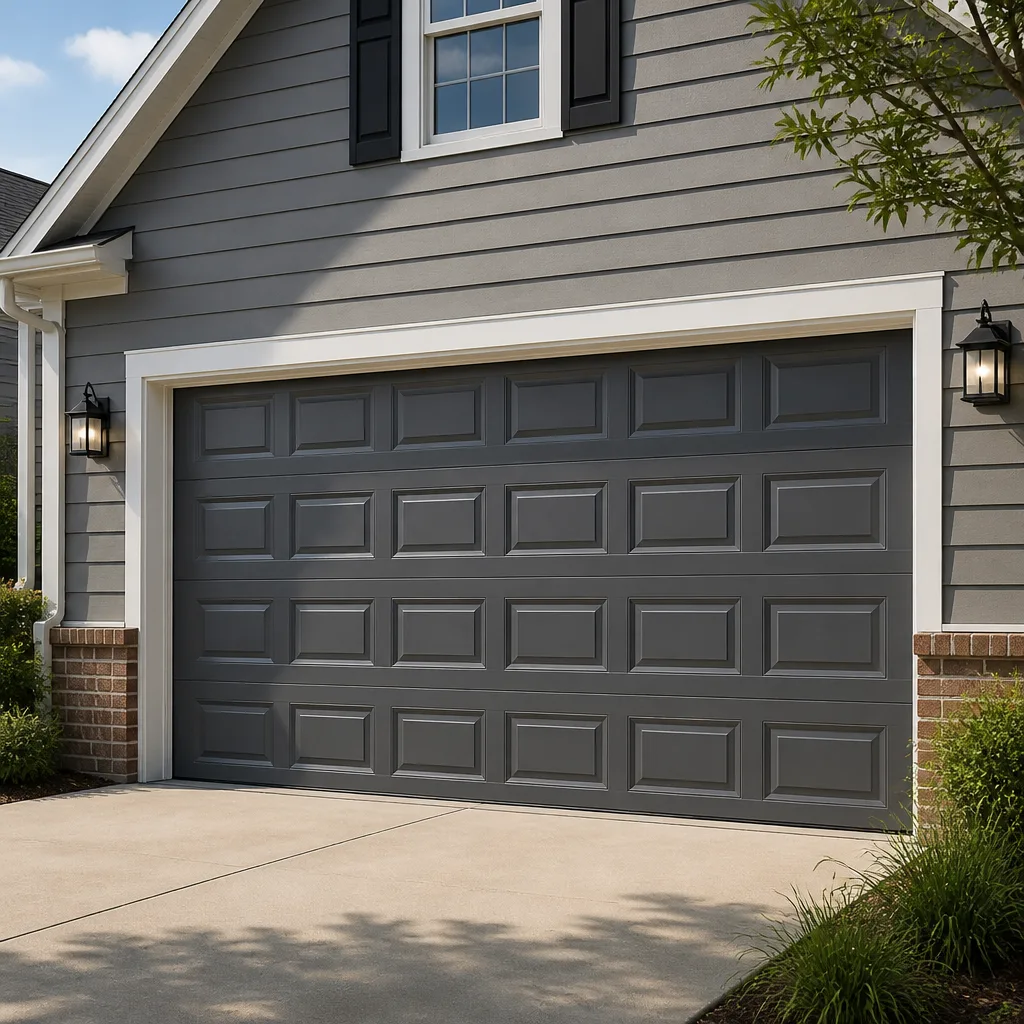 Raised-panel steel
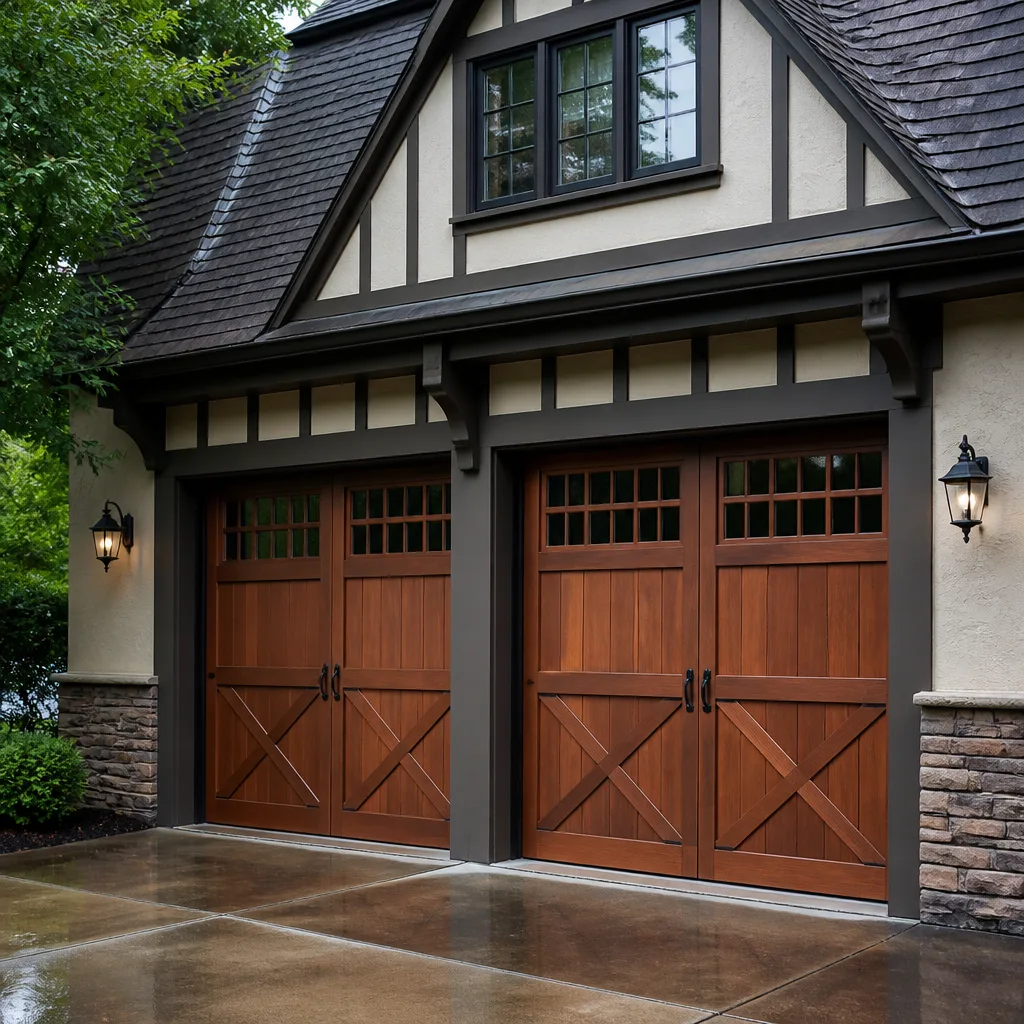 Carriage house
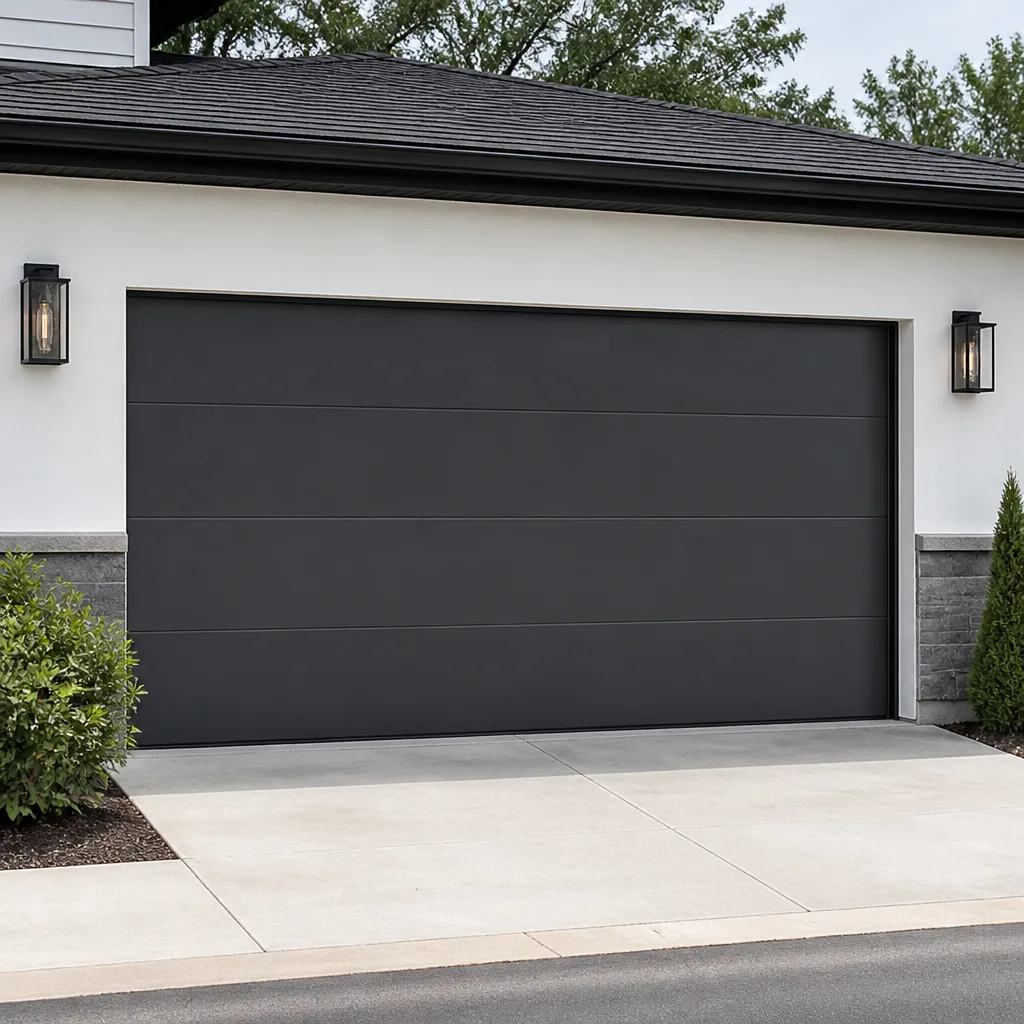 Modern flush
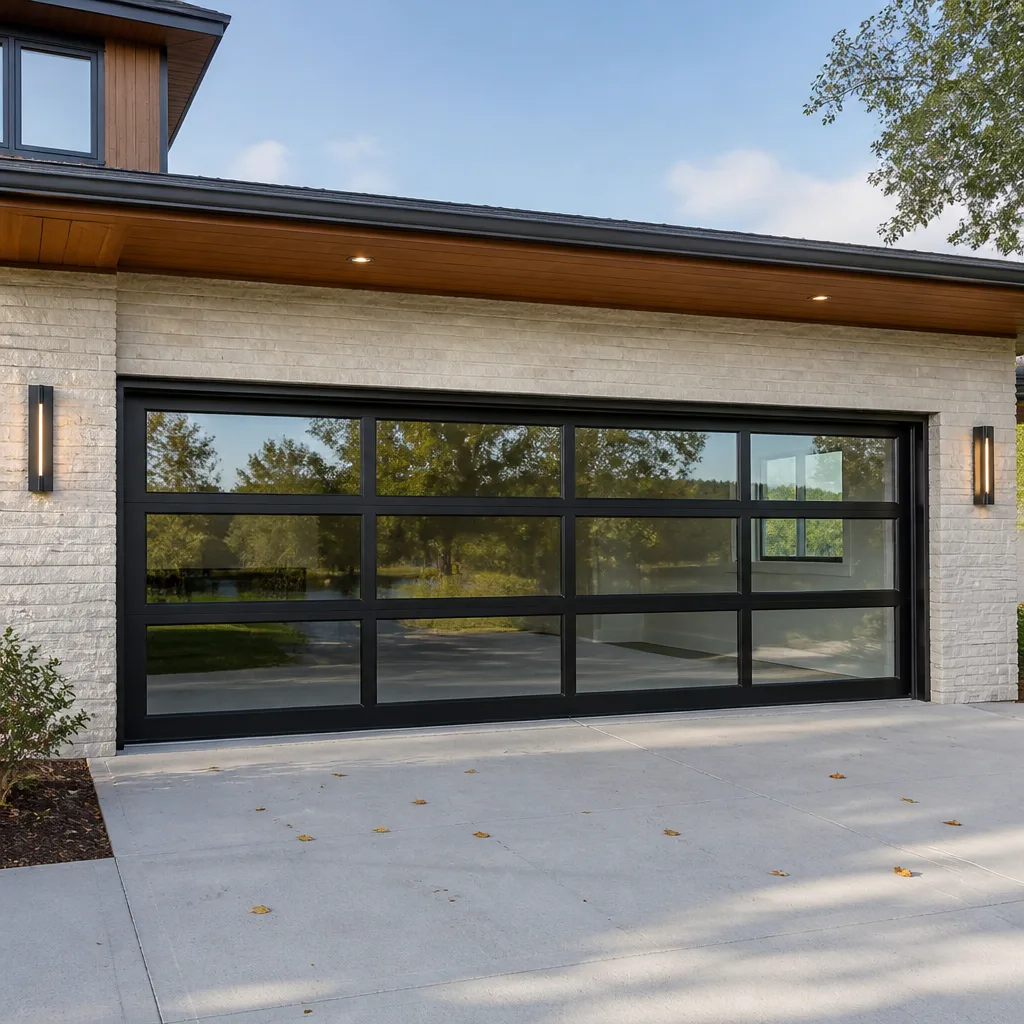 Full-view glass
 LiftMaster openers
 Chamberlain openers
Full 25-point door and opener safety check with every visit - springs, cables, rollers, tracks, and your LiftMaster or Chamberlain opener included
You get a price before we start. It does not change when the pro arrives.
Get your free estimateGarage Door Warning Signs: A Chester Homeowner’s Reference Guide
Most warning sign lists treat every symptom the same way: squeak, clunk, call someone. That misses the thing that actually matters. A garage door in Chester that’s a little slow on a cold morning isn’t just annoying. It’s your opener working against a stiff torsion spring, and when that spring snaps, it won’t happen slowly. The symptom you notice first is rarely the problem itself. It’s the last quiet message from a system that’s been carrying too much load for too long. This guide maps each warning sign to the mechanical cause behind it, then tells you honestly whether you have days, weeks or months before it turns into an emergency. You’ll learn what to check, what to leave alone, and when a phone call beats a weekend of guessing.
Quick Answer
Warning signs that need action within 48 hours are a snapped torsion spring, a door that hangs crooked or comes off the track, a frayed or kinked cable, and any door that reverses without warning. Signs you can monitor for 30 days include slow rollers, a single noisy hinge, a door that only sticks at the very top of travel, and an opener that’s slower than it used to be in cold weather. Anything that changes the balance of the door itself – springs, cables, tracks and brackets – is a trained-professional job, because that’s where the stored tension will hurt you.
Styles & brands we work with
- Raised-panel steel
- Carriage house
- Modern flush
- Full-view glass
- LiftMaster openers
- Chamberlain openers
Table of Contents
- Symptom-to-Cause: What Each Warning Sign Actually Tells You
- Cosmetic Wear vs. Structural Failure: Panels, Cables and Rollers
- Off-Track vs. Deformed Track: Two Very Different Repairs
- The 48-Hour List vs. the 30-Day List
- Opener Warning Signs by Brand: Chamberlain, LiftMaster and Genie
- Why Chester Winters Reveal Problems Other Months Hide
- What You Can Safely Check Yourself
- When to Call a Professional
Symptom-to-Cause: What Each Warning Sign Actually Tells You
A garage door is a balance system. The springs hold most of the door’s weight, the opener only has to persuade it up and down, and the cables and tracks keep everything moving in a straight line. When the balance drifts, the symptoms show up at the point of least resistance – a slow cycle, a loud bang in one spot, a door that sits crooked. Read the symptom against the mechanism and you’ll know what you’re dealing with before you call anyone.
Here’s the matrix we use when a customer describes a problem over the phone in Chester. Match your symptom to the cause in the middle column and the urgency in the right.
- Door is much heavier than usual to lift by hand – a torsion or extension spring has lost tension or partially broken. Urgent: the opener is now lifting a door it wasn’t designed to carry, and it will burn out its gear or motor a few cycles later.
- Loud bang from above the door, then the door won’t open – a torsion spring has snapped. Urgent within 48 hours. Do not attempt to lift the door by hand: it’s the full weight of the door with nothing balancing it.
- Door rises a few inches then reverses – a safety sensor is misaligned, or the force limit on the opener is set too high or too low. Usually a same-day fix.
- Door runs but the motor spins without lifting – a stripped opener gear, a disengaged trolley, or a broken lift arm. Rarely structural.
- Door drifts back down a few inches after it closes – the closing force is too light, or a cable has slack. Worth checking within the week.
- One side of the door lags the other – a stretched or frayed cable on one side, or an uneven spring pair. Urgent: a lagging side puts torque on the tracks and rollers.
- Door squeals at the same point every cycle – a dry hinge or roller, or a track that’s out of line at that spot. A 30-day item.
- Rattling or banging the whole way up – loose hinges, worn rollers or slack in the opener rail. A 30-day item.
The point of the matrix is that “call someone” is not the answer for every symptom. Some are a hinge. Some are a cable about to let go. The difference is what’s being loaded when the door moves.
Cosmetic Wear vs. Structural Failure: Panels, Cables and Rollers
The panels on your door are the first thing you see and the last thing that usually matters. A scuff or a fading finish is a Clopay or Amarr panel doing its job through another Pennsylvania winter. What matters is whether the steel behind that panel has lost its shape, and that comes down to three visual tests you can run from the driveway without touching anything that could hurt you.
- The reflection test for panels. Stand in front of the closed door and look down it from one side at a low angle. On a sound panel, the light bends evenly. On a bent or buckled panel, the reflection breaks and stays broken across the width. A single dent that reflects cleanly around it is cosmetic. A crease that interrupts the reflection line across more than a third of the panel is structural.
- The gap test for cables. Look at the cables running down each side of the door, from the drum above to the bottom bracket. A healthy cable is a tight, even line. If you see a kink, a frayed strand, or a gap between the cable and the drum where it should be wound, stop using the door. A cable that let go is the second most dangerous garage door failure there is.
- The wobble test for rollers. With the door down, look at where each roller meets the track. The roller should sit centered. If it’s angled in the housing, if the stem is bent, or if the roller body has a flat spot you can see, it’s wearing out. Worn rollers are the slow leak that eventually forces a track off line.
Panels have one more thing to check: horizontal cracks along the bottom rail or the stile. Wayne Dalton and Craftsman doors in older Chester homes often have steel panels with a baked-on finish that can flex enough in a hard freeze to crack along seams. If you can slide a fingernail into the crack, the panel is flexing and needs a professional look. If it’s only paint, it’s a spring touch-up – not a garage door repair.
One habit that separates the two categories: give each panel a firm knuckle tap. A dull, hollow sound from the middle is fine on a hollow steel panel. A rattle or a wobble you can feel through the whole door is not. Hollow is normal. Loose is not.
Off-Track vs. Deformed Track: Two Very Different Repairs
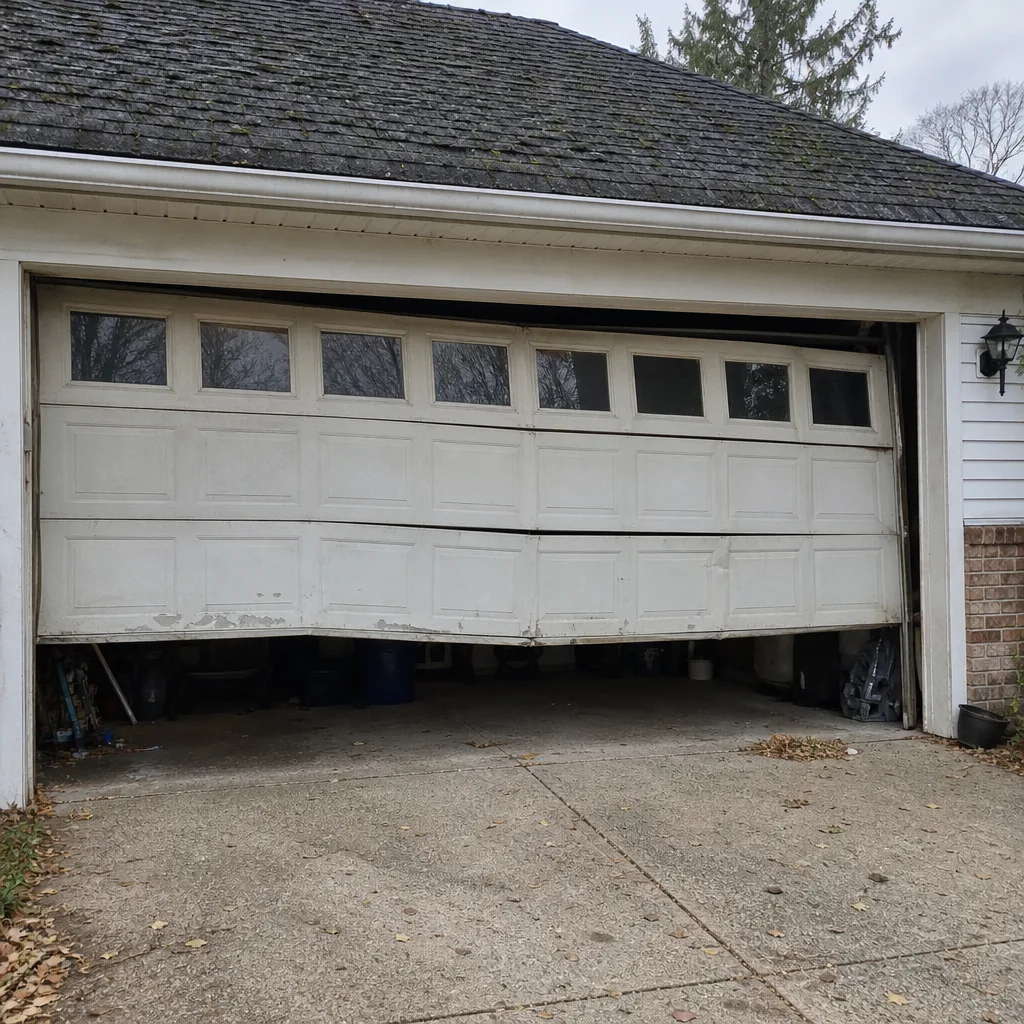
People say their door is “off track” for two completely different failures, and the price you’re quoted should tell you which one a company thinks you have. A door that’s off-track is a door that has jumped the rails but the rails themselves are still straight. A deformed track is a bent or spread rail, and the door may still be sitting exactly where it should be. One is a reset. The other is a track replacement or a track realignment, and the fix involves the door’s whole alignment, not just one roller.
Here’s how to tell the difference without touching anything:
- Off-track: The rollers have come out of the track at one point, but the track itself still runs straight. The door may drop or hang at an angle. You’ll usually spot it where the door meets the horizontal track on one side. The most common causes are a roller that failed, a lift arm that came loose, or the door being forced when the opener was still engaged.
- Deformed track: The track has a visible bend, a kink at the curve, or a spread where the two rails should be parallel. On some doors you’ll see daylight between the roller and the rail. The cause is usually an impact, a door that ran into a lowered obstruction, or a bracket that came loose under load.
Off-track can be a 60-minute repair. A deformed track is a job for a technician, because the door has to be disconnected, the track set to the door’s exact geometry, and every roller and hinge re-checked after the new track is in. A technician can also spot the secondary damage – twisted hinges, a bent bottom bracket, a stretched cable – that an impact on the track almost always leaves behind.
One thing both have in common: stop running the opener. The motor has no idea the door isn’t moving in a straight line. Every extra cycle grinds the rollers, bends the hinges and pushes the gear into a stripped tooth. Call a professional, then leave the door alone until someone looks at it. Our garage door repair team handles both the reset and the track replacement, and the written estimate will tell you which one you’re getting before any work starts.
The 48-Hour List vs. the 30-Day List
Most homeowners ask us the same question in a different way: do I have to deal with this today, or can I get through the week? The honest answer depends on what’s actually failing. Anything holding stored energy – springs, cables, bottom brackets – belongs on the 48-hour list. Anything that’s wearing out slowly or affecting comfort rather than safety belongs on the 30-day list.
The 48-hour list (call now)
- A snapped, visibly broken or hanging torsion spring
- Any door that has come off the track or is hanging crooked
- A frayed, kinked or slack cable
- A door that reverses without touching anything
- A door that closes on something and doesn’t reverse – this is a sensor or force-limit failure, and it’s the single riskiest thing on the door
- A door that’s being held open by a prop because the opener won’t lift it
- Any home where the door is the only lock between the outside and the house
The 30-day list (monitor and schedule)
- A squeak at one hinge or roller
- Slight rattling over the whole cycle
- An opener that’s slower than it used to be in cold weather but still opens the door
- A single cosmetic dent or faded finish that reflects cleanly around it
- A remote that sometimes needs two presses
- A door that only sticks at the very top of travel
- A bottom seal that’s cracked or missing a section
One rule we give Chester homeowners: if a symptom is new in the last week, put it on the 48-hour list even if it doesn’t sound serious. Sudden changes are the ones that precede failures. A slow creep that’s been building for a season or two is usually a wear item you can schedule around. Two of the most common seasonal calls in Chester come from the same cause – a stiff spring working against an aging opener in the first hard freeze and again in the first thaw.
One more: if a symptom is about balance, it’s on the 48-hour list, no matter how mild. A door that lifts more easily on one side, or that feels different at the halfway point, is telling you the springs have gone out of step with each other. That’s a matched-pair decision, not a single-part swap.
Opener Warning Signs by Brand: Chamberlain, LiftMaster and Genie
The opener has its own language, and the three brands we see most often in Chester say different things when something’s wrong. Knowing the model and the symptom saves you the “it’s the board” phone call before anyone has to come out.
Chamberlain and LiftMaster
These two share a lot of the same electronics, and the same behaviors translate. The most useful signs:
- Rapid clicking from the motor head with no door movement – a logic board or capacitor failure. On a Chamberlain, this is almost always electrical, not mechanical.
- Door goes down, then immediately back up – the wall control may be locked, the safety sensors are misaligned, or the travel limit has drifted. On LiftMaster units with a wall console, a locked control overrides the button without any obvious sign.
- Remote works from outside but the wall button doesn’t – a wiring fault at the wall console, not the opener.
- Door works from the wall button but not the remote – a remote battery, an antenna on the head unit, or a code desync after a power flicker. Chester power flickers in summer storms, and the older LiftMaster models often need a re-pair after a hard outage.
Genie
- Motor runs, door doesn’t move, and the chain or belt goes slack – a stripped gear in the case. Genie gear sets are a known wear point and are usually fixable without replacing the opener.
- Door runs past the bottom and hits the floor hard – a travel limit issue, made worse by cold weather and a door that’s stiffer than normal.
- Slow descent, normal ascent – the force setting has been turned down (often to fix a different symptom). It’s a 30-day item unless the door is heavy.
In our experience a symptom on a LiftMaster or Chamberlain is more often software, sensor or remote; a symptom on a Genie is more often mechanical. Neither is a guarantee, but it changes where the technician looks first, which shortens the appointment.
Two more brand marks worth knowing about in Chester. A Craftsman opener from an older installation is usually a rebadged Chamberlain with a different faceplate – same electronics, same troubleshooting. A Clopay door opening slower than its neighbors is more often a spring or roller problem than an opener problem, because the panel weight on those doors is heavier and the springs do more of the work. Amarr and Wayne Dalton doors can run on the same openers and give you the same symptoms – which is why the brand of the door and the brand of the opener together tell a real story about what’s failing.
When the diagnosis lands on the opener, our garage door opener repair team works on your specific model – Chamberlain, LiftMaster, Genie and the other brands that dominate Chester homes – rather than guessing at a generic opener. If the opener’s actually fine and the door’s the problem, we’ll tell you that too.
Why Chester Winters Reveal Problems Other Months Hide
A garage door in Chester runs through a full range that a door in a milder climate never sees. A summer along the Route 352 corridor can push the door to the upper 90s. A January morning in the 325th District can sit in the teens. The metal, the springs and the grease all move with the temperature, and that’s exactly why the most common warning signs in this county show up in November, February and April, not in June.
What’s actually happening in the cold:
- Steel springs lose tension as the temperature drops. A torsion spring that’s already near the end of its life will often fail on the first hard freeze rather than in summer. That “snap” homeowners hear in January is a spring fatigue that’s been building for a year.
- The door gets stiffer. Cold rollers and cold hinges resist movement. The opener has to work harder, which exposes force-limit and travel-limit settings that were fine in August.
- Wooden and steel panels flex. A panel with a hairline crack from an earlier impact will often open up in a freeze-thaw cycle. That’s where the crack along the bottom rail comes from.
- The ground heaves. A driveway slab in Chester that shifts a fraction of an inch after a freeze can move a sensor enough to trip the door every cycle. That’s why a “winter sensor problem” that only happens near a certain spot often goes away in spring.
The useful habit is to check the door twice a year: once in early fall, before the first hard freeze, and once in early spring, after the last one. Both checks are visual – look at the springs, run the emergency release, look at both ends of the door. A ten-minute check in October is the cheapest way to keep January from being a 48-hour call.
One thing we hear a lot in Chester is that the door is fine all summer and then “suddenly” starts reversing in winter. Almost always it’s a sensor at the bottom that got nudged when the driveway heaved. The door isn’t the problem; the slab under it is. Fit the sensor and it holds.
What You Can Safely Check Yourself
There’s a lot you can look at and very little you should touch. The rule is simple: anything that holds stored energy – springs, cables, brackets, the torsion bar – is a trained-professional job. Anything that’s visual, diagnostic or a remote is fair game for a homeowner.
Safe to check yourself
- Look at both sides of the door at eye level. Both sides should be the same height. A door that’s high on one side is a balance problem.
- Run a safety sensor test with a hand or your foot. Once the door starts down, wave an object into the sensor line. The door should reverse immediately. If it doesn’t, that’s a 48-hour item.
- Pull the emergency release with the door closed, then open and close the door by hand. A properly balanced door should lift easily and stay at any point. If it feels heavy, the springs are losing tension.
- Look at the cables and springs. A snapped spring is often visible as a gap in the coil. A frayed cable has a fuzzy, uneven edge.
- Test remotes and wall buttons. If one works and one doesn’t, you have a remote or console problem, not a door problem.
- Look at the bottom seal from inside the garage. Sunlight through a cracked seal is fine; a gap along a third of the door is not.
Not safe to check yourself
Do not try to adjust, replace or release the torsion spring, the torsion bar, the cable drums, the bottom bracket or the cable that runs through the spring. These parts hold the full tension of the door, and a torsion spring can cause serious injury when it releases unexpectedly. We say this plainly because it’s the most common DIY injury in this trade. A spring that looks fine is still under load, and a spring that’s snapped is a different kind of hazard again. Even with the door down. Even on a weekend. That’s what our garage door spring repair service exists for.
Fitting a new remote, changing a battery, adjusting a sensor bracket that’s clearly out of line, or resetting a travel limit that you’ve adjusted before – those are within reach if you’re careful. Anything that would have you up a ladder with a wrench near the spring is not.
Common Mistakes to Avoid
- Greasing a torsion spring because it’s squeaking. A little grease on the hinge pins and rollers is fine; grease on the spring coils holds grit and can hide the early signs of fatigue. If the spring is squeaking and the door is getting heavy, the spring is the problem, not the grease.
- Turning up the opener force limit to fix a heavy door. It’s the most common DIY “fix” in Chester, and it’s the wrong one. The opener will lift for a few more cycles and then burn its gear and motor out, and you’ll be replacing both the spring and the opener instead of just the spring.
- Prop-sticking a door and calling it fine. A dowel or a broom handle holding the door up feels like a temporary fix. It’s a warning that the spring is gone, and every week it’s propped is a week closer to the cable letting go.
- Running the door when it’s skipping or grinding. A door that’s coming off the track gets more expensive with every cycle. If you hear metal on metal, stop, and leave the remote on the wall.
- Treating a single fresh dent and a buckled panel the same way. A dent that reflects cleanly around it is cosmetic. A panel with a crease that bends the reflection is not – and pricing it as a single panel replacement is a mistake that leads to a return visit.
- Ignoring cold-weather slowness. If the door is noticeably slower in January than it was in August, your opener and your spring are telling you something. Chester winters don’t fix a stiff spring, they just make it fail on a colder morning.
- Assuming the “off-track” quote is the same as a track replacement quote. They aren’t. Ask any Chester company to tell you, on the phone, whether the track is straight and the door has jumped, or the track itself is bent. The price you should expect is very different.
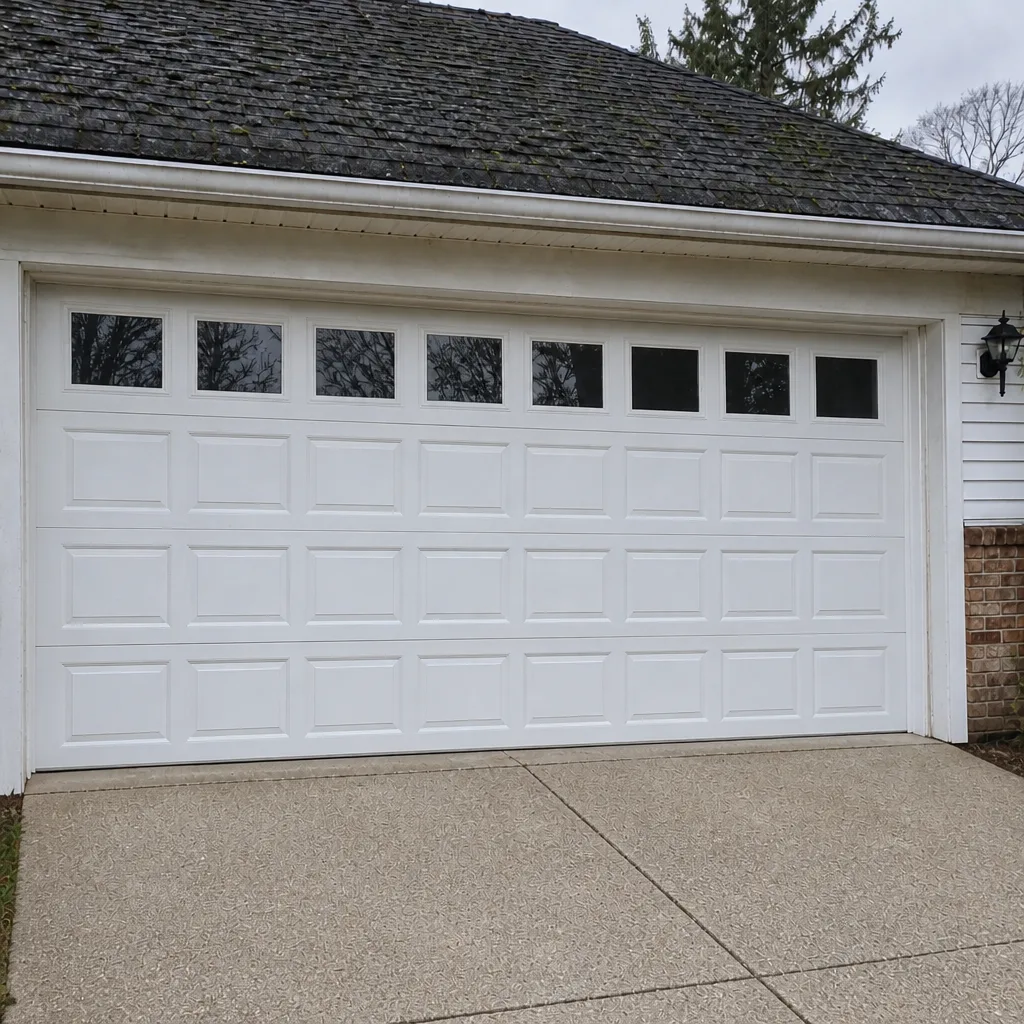
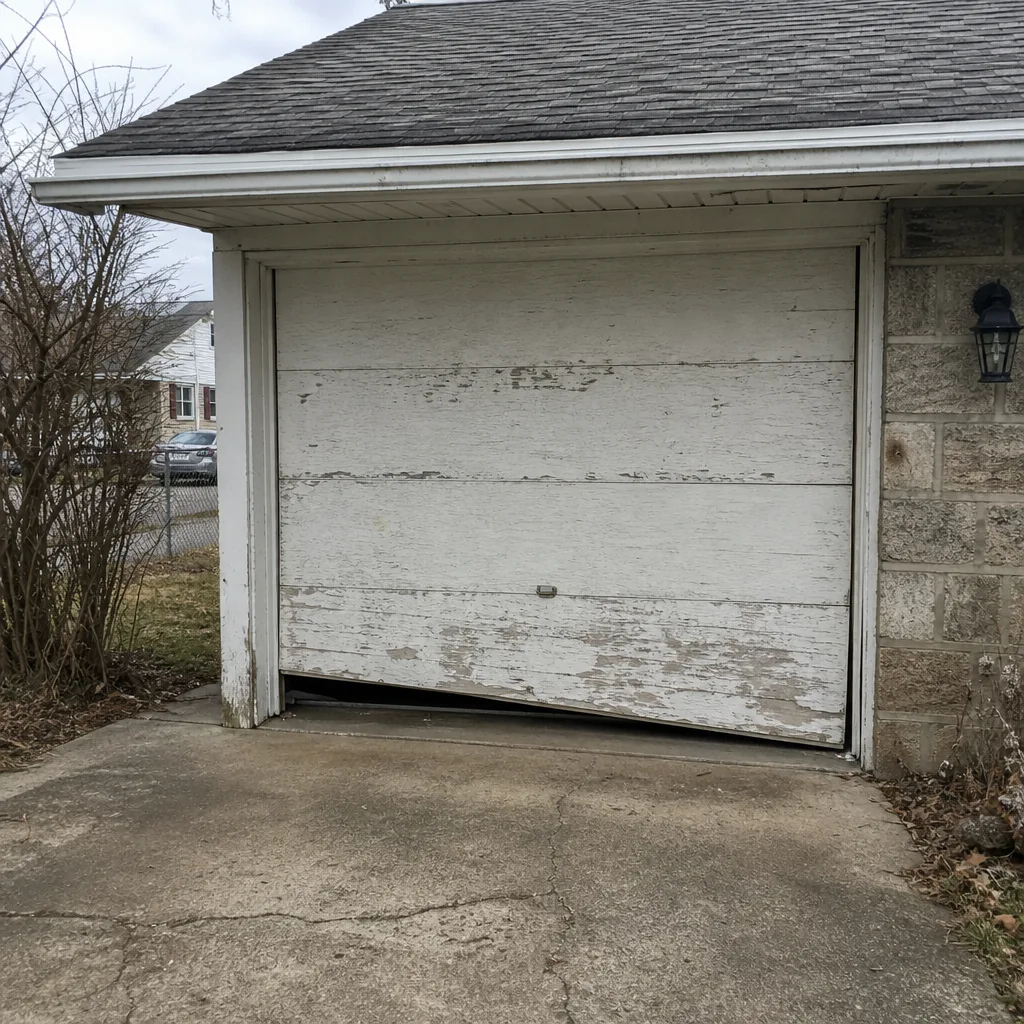
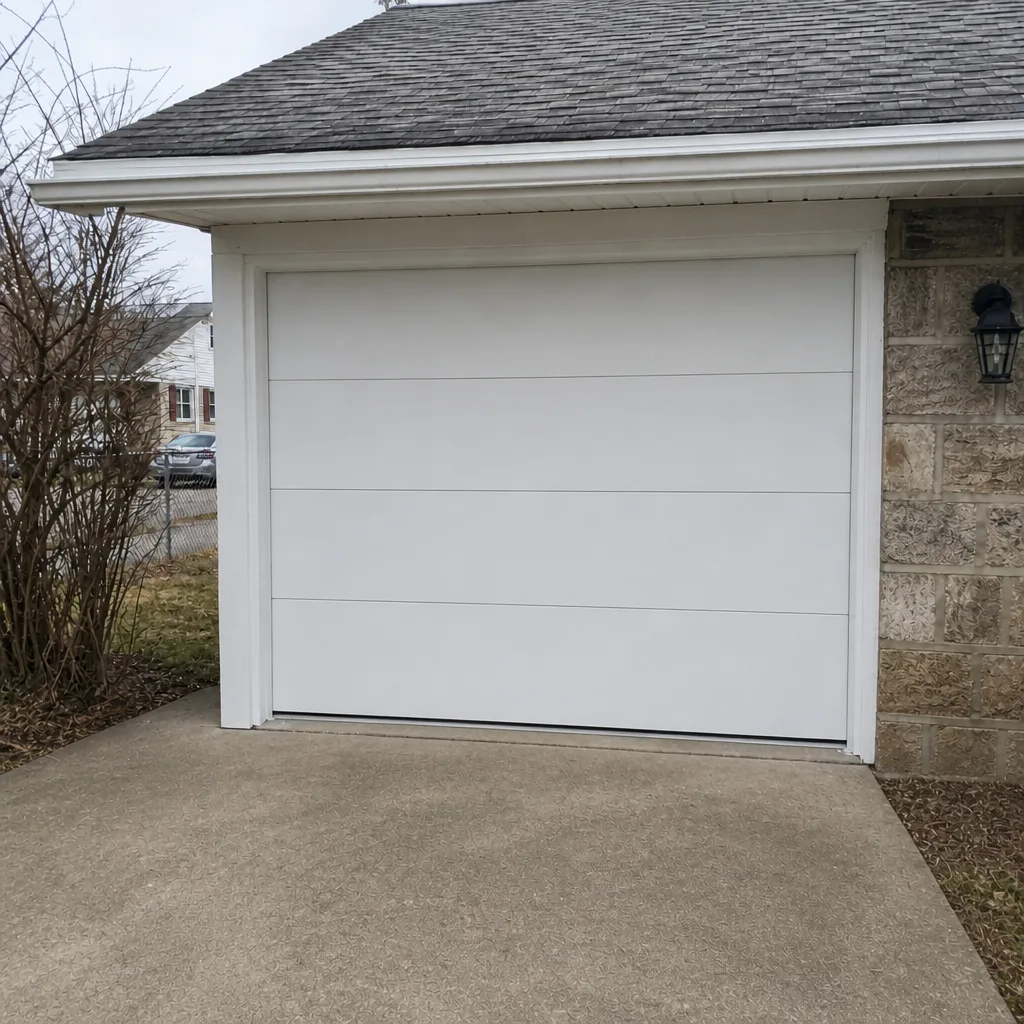
See the difference
 Before
 After
 Before
 After
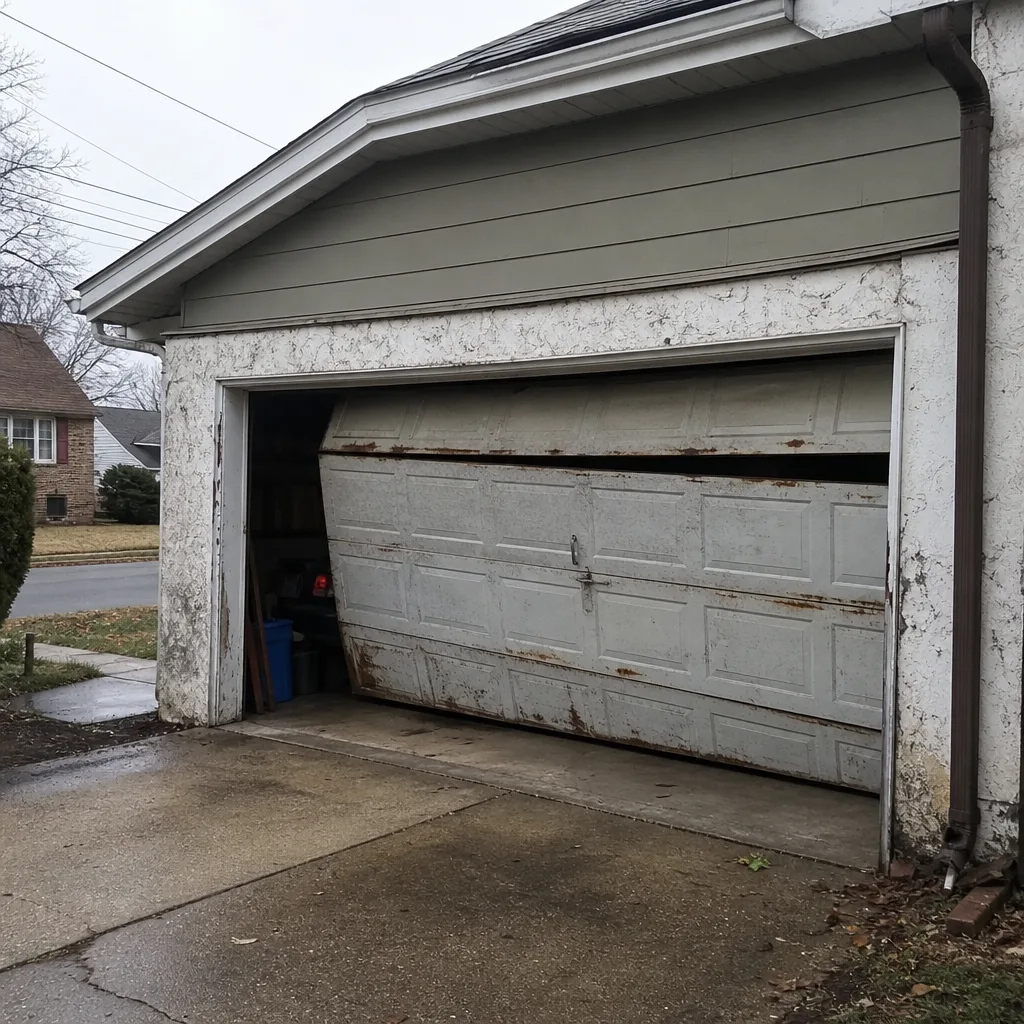 Before
 After
When to Call a Professional
Call a professional when a symptom involves the springs, the cables, the brackets, the track or the balance of the door – and call the same day if the door reverses on its own, has come off the track, or has a visible cable failure. Call us if the door is brand-specific and you want a technician who’s worked your model rather than one who’s reading it off a screen. Call us if the door is your only lock and the opener won’t lift it, or if the car is trapped and the family needs to get out.
Chester Garage Door Repair Pros offers free estimates in Chester – call (844) 321-5685. The price is quoted and agreed before any work starts, and the written estimate sets the final price. We answer 24/7, with fast dispatch from 7am to 7pm, Sunday through Friday. We work on the brands Chester homes actually have – LiftMaster, Chamberlain, Genie, Clopay, Amarr, Wayne Dalton, Craftsman and Raynor – and our technicians have up to 14 years of experience. As a single-trade specialist we only work on garage doors, so the answer you get is a garage door answer, not a general handyman’s best guess. You can start with a look at Chester Garage Door Repair Pros and go from there.
Frequently Asked Questions
A door that’s noticeably heavier to lift by hand, or a door that closes harder than it opens. The next sign is usually a loud bang from above the door, which is the broken spring itself. Don’t wait for the bang. If the door feels heavy, call us on (844) 321-5685 for a free estimate, and keep the door down until someone’s looked at it.
Off-track means the rollers have jumped the rail but the rail is still straight. A bent track has a visible kink or spread in the metal itself. Off-track is a reset; a bent track is a replacement or realignment. A technician can tell you which one on the phone, and the written estimate tells you what the fix involves before any work starts.
A Chamberlain or LiftMaster that clicks without moving is almost always an opener problem – a logic board, capacitor or gear issue – though a heavy door can also stall one. A technician will test both before quoting. Call (844) 321-5685; the estimate is free and the price is agreed before any work.
Cold alone rarely breaks a door, but it exposes a spring that was already near the end of its life and a door that’s heavier than its opener thinks. A hard January freeze is the most common time for a torsion spring to snap in this part of Pennsylvania. A pre-winter check in early fall is the best way to avoid it.
Don’t force the door up and don’t keep running the opener. If you can safely pull the emergency release cord with the door down, try lifting the door by hand – if it feels heavy, put it back down and call us. That’s what our emergency service is for. Call (844) 321-5685. We answer 24/7, with fast dispatch from 7am to 7pm, Sunday through Friday.
No. The written estimate is the price, and the work starts only after you agree to it. If we open the door and find a narrower problem than we guessed, the number comes down. If we find a wider one – a bent track behind an off-track symptom, for example – we stop and requote before touching anything. Call (844) 321-5685 for a free estimate.
The Bottom Line
Warning signs are a language, not a list. A squeak is a hinge; a heavy door is a spring; a door that’s slow in January is a spring plus an opener working harder than it should. Put the spring, cable and balance symptoms on the 48-hour list; put the wear items on the 30-day list, and check both in fall and spring. Leave the springs, cables, brackets and track to a trained professional – the stored energy in those parts is exactly why spring repair is a specialist job and not a Saturday project. And when the door tells you something you can’t read, call it in. Write down what you see and when you noticed it; that’s more useful to a technician than any description over the phone.
Call Chester Garage Door Repair Pros on (844) 321-5685 for a free estimate. We handle repair, opener repair, spring repair, full installation and emergency calls across Chester, on the brands your home actually has, from a team that works on garage doors and nothing else. We answer 24/7. Fast dispatch from 7am to 7pm, Sunday through Friday.
Written by the team at Chester Garage Door Repair Pros.